Lawn care
Fall Lawn Care Calendar: A Month-by-Month Plan for Cool-Season Grass
By Lawn & Loam Editorial DeskPublished 2026-07-025 min read
For cool-season lawns, fall is the most important season: soil stays warm enough for roots to recover while air temperatures favor grass over weeds. This calendar runs through September, October, and November in the order most lawns need it. Dates shift with your USDA zone, so confirm big jobs against the turf calendar published by your state university.
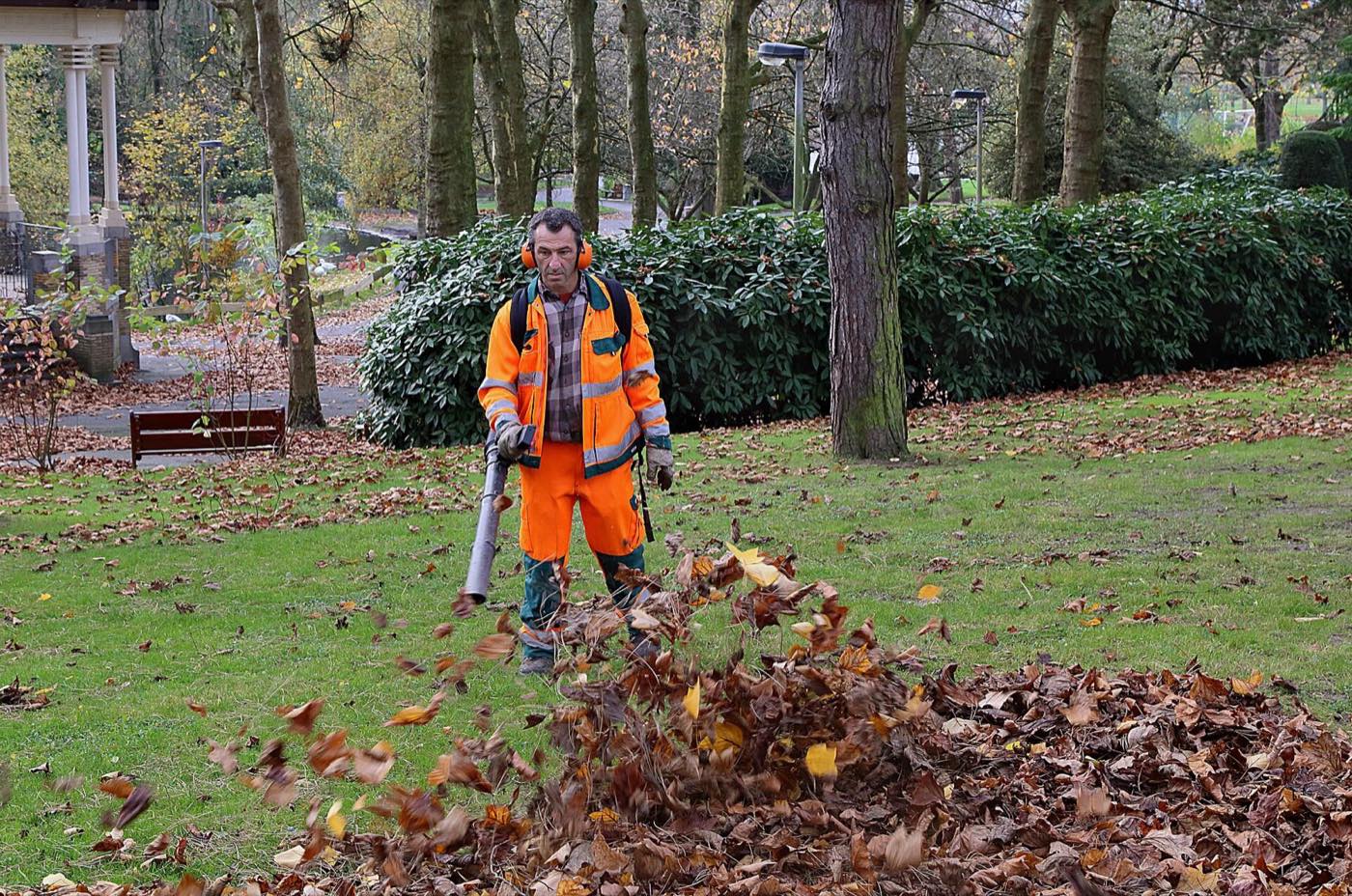
Image source: File:Gardener in autumn J1.jpg · CC via Wikimedia Commons
September: aerate, overseed, and start fall feeding
Early fall is when the two biggest cool-season chores overlap. Iowa State University Extension calls September the best month to core-aerate cool-season lawns, because grass recovers quickly while soil is still warm. If the lawn is compacted or thin, aerate first, then overseed into the same window.
Nebraska turfgrass specialists suggest mid-August through mid-September for overseeding cool-season lawns in their region, and nearby states give similar windows. Finish seeding while soil is warm enough for germination, then start the fall fertilizer program your local extension office recommends.
- Aerate before you overseed; the holes give seed somewhere to land.
- Water new seed lightly and often until germination, then deeper and less often.
- Skip pre-emergent weed control in areas you just seeded.
October: keep mowing, and keep leaves from piling up
Keep mowing through October. Iowa State recommends lowering the mower to 2.5 to 3 inches in mid-to-late September and continuing until the grass stops growing, never removing more than one-third of the blade per pass. The lower cut also lets light reach new seedlings.
A thin leaf layer is fine to mow into the turf, but a thick mat smothers grass and invites snow mold. If leaves pile up faster than the mower can chew them, rake or blow the surplus onto beds or into the compost pile.
- Delay a normal-height mowing over young seedlings until new grass is established.
- Know your first frost date and plan the final tasks around it.
- Sweep clippings and leaves off driveways so they don't wash into the street or curb inlets.
November: last mow, leaf cleanup, and winter prep
November is about finishing cleanly. Continue mowing until cool-season grass stops growing after sustained cold weather; a final short mow keeps turf from matting under snow. Remove leaves that would sit under snow all winter, and mulch what you can back into the lawn.
If your state's program includes a late-fall fertilizer pass, the window is usually when grass is still green but growth is slowing; apply by the label and follow local rules. November is also a good month for a soil test, so next year's plan starts from data.
Watch the grass rather than the date: fertilize by label and soil test, and mow until growth stops.
- Sweep fertilizer granules off hard surfaces after application.
- Store equipment per the owner's manual before the ground freezes.
- Leave the lawn at a normal winter height; don't scalp it.
Adjust the calendar to your zone and grass type
These dates describe a northern cool-season lawn. Shift everything earlier farther north and later in the south, and remember that warm-season grasses like bermudagrass and St. Augustinegrass follow a mostly spring-and-summer schedule. Universities publish month-by-month lawn calendars for their states, and the one closest to you is the best working document.
Whenever a task says 'now,' confirm with the seasonal timing table from your state university first.
- Cool-season lawns: main work window is September through November.
- Warm-season lawns: fall means wind-down, not renovation, in most regions.
- Adjust every date to your local climate, not to a national checklist.
Sources
Sources used for this page
- Iowa State University Extension and Outreach: Late Summer and Fall Lawn Care ↗
- Penn State Extension: Tips to Improve Your Lawn Care Program This Fall ↗
- University of Nebraska–Lincoln Turfgrass Science: Overseeding in the Fall ↗
- Clemson Cooperative Extension Home & Garden Information Center: Tall Fescue Maintenance Calendar ↗
Keep planning
Related guides
How to Aerate a Lawn: Timing, Methods, and What It Actually Fixes
What core aeration fixes, when to aerate cool-season grass, how core aeration differs from spike aeration, and when to skip it entirely.
Lawn careOverseeding Your Lawn: Fall vs. Spring and How to Do It Right
Why homeowners overseed a cool-season lawn, why fall beats spring in most regions, and the mow, loosen, seed, cover, and water method.
Lawn careFall Fertilizer for Cool-Season Lawns: Timing, Nitrogen, and What 'Winterizer' Means
Why fall is the most important feeding window for cool-season grass, how to read an N-P-K label, and what 'winterizer' actually means.