Basics
Lawn Care by Month: A Year-Round Maintenance Map
By Lawn & Loam Editorial DeskPublished 2026-07-165 min read
This is the hub article for the lawn care section: a 12-month map of the main jobs on a cool-season lawn. It's a map, not a script, because dates move with your USDA zone, local weather, and grass type, and warm-season lawns follow a different calendar. The linked guides on this site, aeration, overseeding, the fall and spring calendars, and weed control, go deeper on each job.
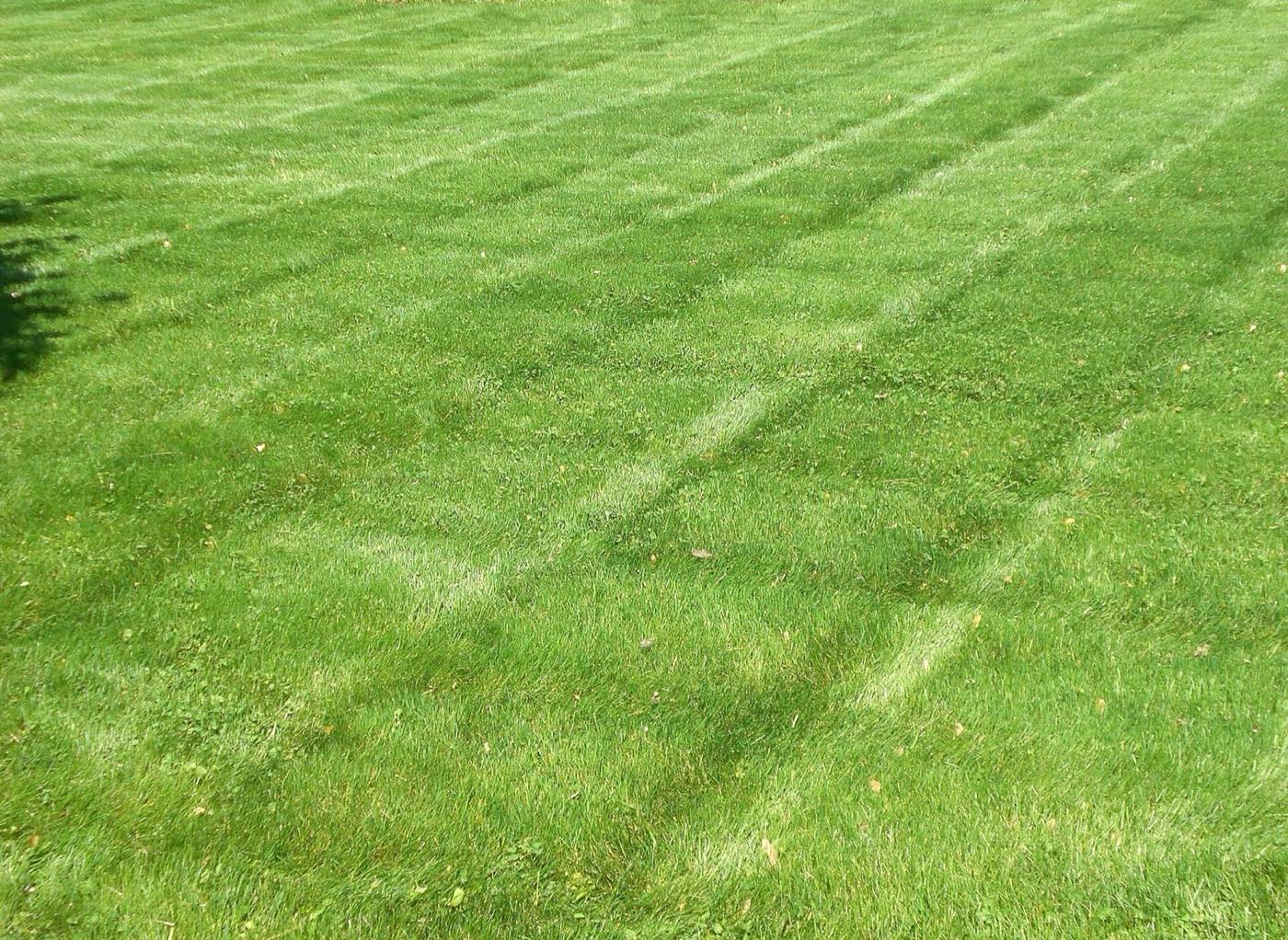
Image source: File:StripedLawn.jpg · CC via Wikimedia Commons
December through February: dormancy and planning
A cool-season lawn is largely dormant in winter. Keep traffic off frozen turf and avoid walking the same path repeatedly, because thawing crowns can be crushed. Salt and de-icing runoff can burn turf along drives; shovel first, use the minimum labeled product, and sweep granules away from grass.
Winter is a protection and storage window: remove wet leaves that shelter snow mold, keep mower blades dry and sharp for spring, and use trunk guards or temporary mesh where deer and rabbits browse. Do not scalp or fertilize dormant turf just to fill the calendar.
- December: finish leaf cleanup before snow; store equipment with fuel handled per its manual.
- January: inspect salt injury and snow-mold-prone areas; order a soil test kit.
- February: check mower height and seed inventory; use the linked spring calendar for green-up tasks.
March and April: the wake-up window
March is mostly waiting: clear storm debris and watch for steady green-up, but resist starting early.
In April, most cool-season lawns in the Midwest and Northeast get their first mow, and Iowa State Extension lists April as a good aeration month in its region. Let the soil dry before working it; wet-soil compaction costs all summer.
- March: rake debris only when soil is dry enough not to pull up crowns.
- April: first mow at the recommended height; aerate if compaction is a problem.
- April: spring fertilizer only if your program and soil test call for it.
May and June: peak mowing season
This is the fastest growth of the year. Use the lawn itself as the interval: mow before the next cut would remove roughly a third of the standing height, keep the deck at the species-appropriate setting, and return short clippings.
Irrigation becomes relevant as heat builds; early-morning, deep watering is the norm in cool-season regions. Late spring is also the window to spot-treat young broadleaf weeds.
- May: stay on a mowing schedule; don't let growth get away from you.
- June: watch for dry spots as heat builds; water deeply but less often.
- Late spring: spot-treat broadleaf weeds while they're young.
July and August: heat stress management
Cool-season grass struggles in high summer. Raise the mowing height if your program calls for it, let the lawn slow down rather than pushing it with water and fertilizer, and skip nitrogen during heat waves.
Hold off on major projects now: no overseeding, no dethatching, minimal aeration. Water deeply and early when you water.
- July: mow at the summer height; avoid scalping.
- August: start planning the fall calendar; fall prep begins late this month in cooler states.
- Summer: let the lawn go dormant rather than forcing it.
September through November: the recovery and repair season
Fall rebuilds cool-season lawns: aeration and overseeding in September, the main fertilizer passes in early and late fall, and mowing until growth stops. This quarter does more for next year's lawn than spring and summer combined; use the linked fall calendar for the detailed aeration and overseeding sequence rather than repeating it here.
Adjust the map to your reality: shift dates north and south, and in the warm-season belt follow your state's spring-and-summer program for bermudagrass or St. Augustinegrass. The constants are principles, not dates: avoid scalping by shortening tall grass over successive cuts, feed from a soil test and product directions, and reserve disruptive work for active growth.
- September: aerate and overseed; begin the fall fertility program.
- October: keep mowing; mulch or collect leaves as they fall.
- November: final mow, leaf cleanup, and winter equipment storage.
- For local dates, compare this map with your state's extension calendar and shift each task to soil temperature and growth, not a fixed date.
Sources
Sources used for this page
Keep planning
Related guides
Your first year in a new yard: a homeowner's maintenance primer
Prioritize lawn mowing, watering young trees, drainage checks, and equipment care through your first year as a new homeowner.
BasicsStarter Yard Tools: The Essential First-Year Homeowner Kit
Build a first-year yard tool kit in order of need: mower, string trimmer, rake, pruners, and shovel, matched to your yard instead of a store's display.
Edible gardenRaised garden beds: sizing, materials, and where to put them
How to choose raised garden bed size, depth, materials, and location, plus how raised beds compare with growing crops in the ground.