Lawn care
Fall Fertilizer for Cool-Season Lawns: Timing, Nitrogen, and What 'Winterizer' Means
By Lawn & Loam Editorial DeskPublished 2026-07-085 min read
For cool-season grass, the most valuable fertilizer applications of the year happen in fall, when roots store energy for spring green-up. The page covers when to feed, why nitrogen comes first, and what the word 'winterizer' means. It avoids brands and specific formulas: the right rate depends on your soil test, your state's program, and the label on the bag.
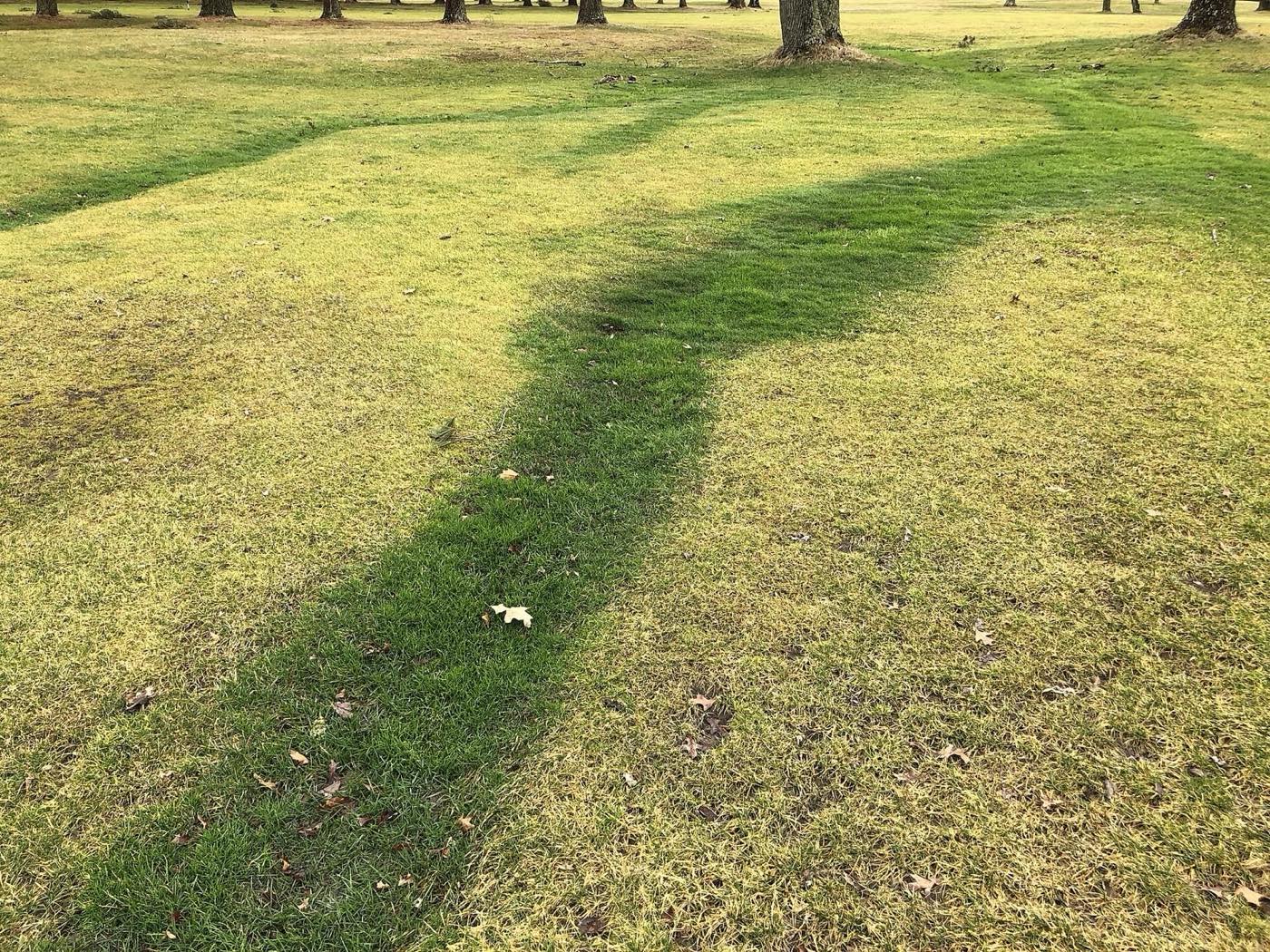
Image source: File:2024-01-27 13 13 38 Green stripes of grass in mid-winter due to excess fertilizer run-off at the Mountain View Golf Course in Ewing Township, Mercer County, New Jersey.jpg · CC via Wikimedia Commons
Why fall is the key feeding season
Cool-season grasses like Kentucky bluegrass, tall fescue, and perennial ryegrass grow most strongly in cool weather. As temperatures drop in fall, top growth slows but roots keep working, storing carbohydrates for spring. Penn State Extension's season-by-season lawn guidance treats fall as the main recovery and feeding period.
Timing is why it works: nitrogen pushes leaf growth, so a heavy late-spring feed makes cool-season grass carry extra blades through summer heat. Fed in fall, the same nitrogen supports roots and next spring's green-up.
- Fall applications mostly support root storage, not visible leaf growth.
- Late-spring nitrogen on cool-season grass tends to feed the problem, not the lawn.
- Fall feeding sets up spring green-up.
Read the bag: nitrogen first, then phosphorus and potassium
Bags show three numbers for nitrogen, phosphorus, and potassium, in that order. For established cool-season lawns, nitrogen is the nutrient to manage first; the other two should follow a soil test. University of Minnesota Extension's lawn fertilizer guidance starts from the same place: know your soil, know your grass, and match the product to both.
Phosphorus deserves caution: several states restrict it in lawn fertilizer unless a soil test shows the lawn needs it, because runoff pollutes waterways. If you haven't tested, many extensions recommend a low- or zero-phosphorus product until a test says otherwise.
- The first number on the bag is nitrogen; that's what fall timing is about.
- Test your soil before buying a bag, especially if you've never tested.
- Follow your state's fertilizer law and any local watershed rules.
Timing: the early-fall feed and the late-fall window
A common program splits fall feeding in two: an early-fall pass around September, when the lawn is recovering from summer, and a final late-fall pass after growth slows while grass is still green. The split varies by state, so follow the schedule your extension office publishes.
'Winterizer' is the name many stores give that late-fall product, but it's a marketing term, not a scientific definition or an EPA designation. It usually points to a late-fall, mostly nitrogen application for root storage and earlier spring green-up. Because winterizer products vary, read the actual bag.
- Early fall: feed while the lawn is actively recovering from summer.
- Late fall: one final pass while grass is green but growth has slowed.
- Never apply to frozen ground or right before heavy rain.
Apply by the label, not by feel
The product directions set the legal site, application rate, spreader calibration, protective gear, and any watering step; use those fields as the job checklist. Apply evenly, and sweep up fertilizer on driveways or sidewalks so it can't wash into curb inlets or storm drains. Whether to water after application also comes from the label.
Stay within the annual nitrogen budget your state extension recommends for your soil and grass type. Less nitrogen at the right time beats more at the wrong time.
- Set the spreader to the label setting and walk at a steady pace.
- Refill the spreader on the lawn, not on pavement.
- Follow the label's watering instructions exactly; don't improvise.
Sources
Sources used for this page
Keep planning
Related guides
Fall Lawn Care Calendar: A Month-by-Month Plan for Cool-Season Grass
A month-by-month fall lawn care calendar for cool-season grass: aeration, overseeding, fertilizer, and leaf cleanup in the order they matter most.
Lawn careHow to Aerate a Lawn: Timing, Methods, and What It Actually Fixes
What core aeration fixes, when to aerate cool-season grass, how core aeration differs from spike aeration, and when to skip it entirely.
Lawn careOverseeding Your Lawn: Fall vs. Spring and How to Do It Right
Why homeowners overseed a cool-season lawn, why fall beats spring in most regions, and the mow, loosen, seed, cover, and water method.