Lawn care
How to Aerate a Lawn: Timing, Methods, and What It Actually Fixes
By Lawn & Loam Editorial DeskPublished 2026-07-045 min read
Core aeration is one of the most recommended lawn chores in extension materials, yet it's often misunderstood. The page explains what aeration does and doesn't fix, how core aeration differs from spike aeration, and when cool-season lawns benefit. Aeration is a cultural practice, not a cure-all: mowing, fertility, and watering still have to be right.
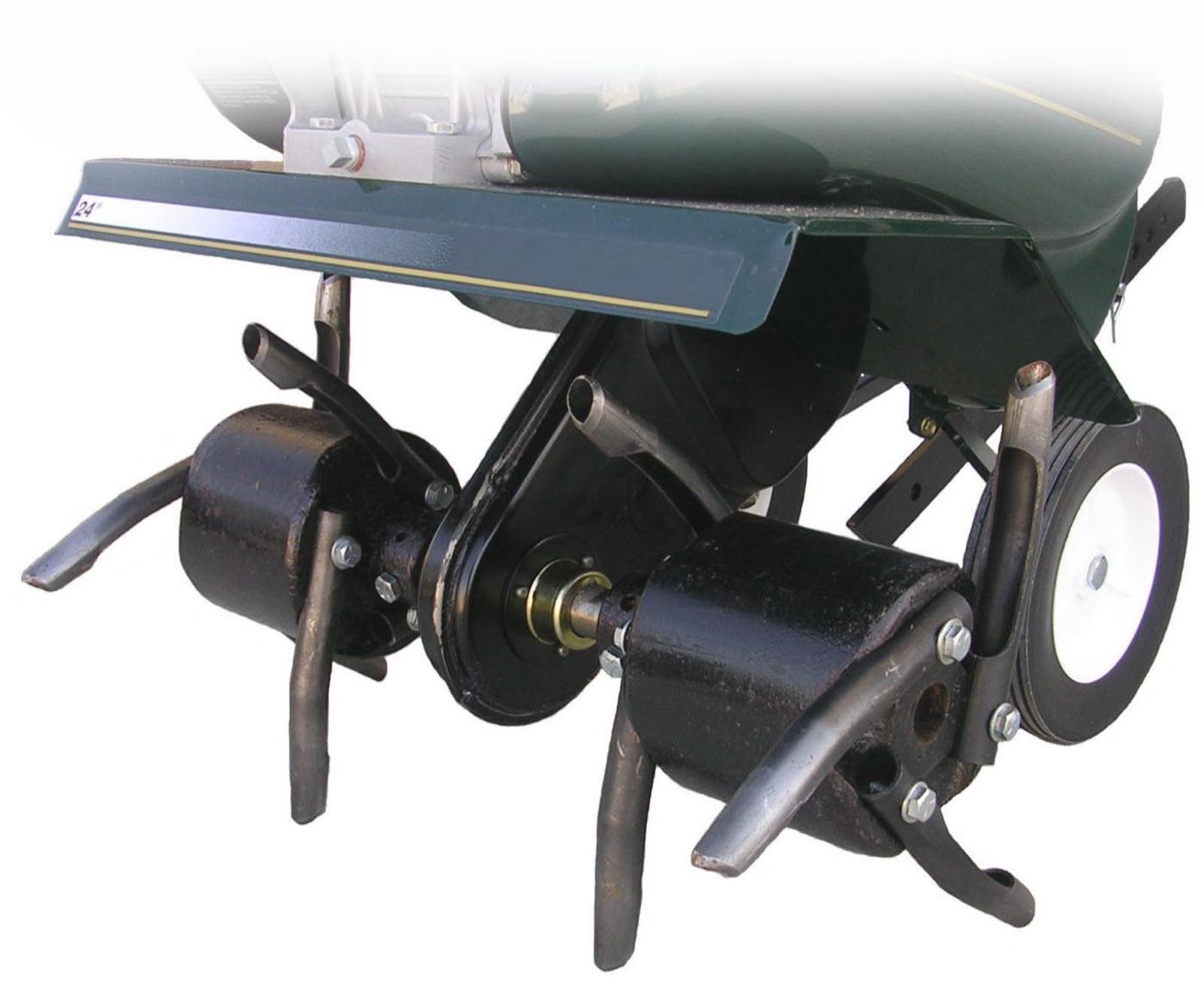
Image source: File:Lawn aerator attachment on a garden tiller.JPG · Public domain via Wikimedia Commons
What core aeration does (and doesn't do)
A core aerator pulls small plugs of soil out of the lawn rather than simply poking holes. Iowa State University Extension credits aeration with relieving soil compaction, improving water and nutrient movement, and helping prevent thatch buildup. The result is better growing conditions for the turf.
What it doesn't fix matters as much. Aeration won't correct a fertility problem, a disease issue, or grass poorly matched to its light and soil. It improves the environment roots grow in; it doesn't replace soil tests, proper mowing height, or the right seed.
- Most useful on lawns with heavy foot or pet traffic.
- Most useful on lawns sitting on heavy clay soil.
- Rarely needed yearly on light, well-drained soil with light traffic.
Core aeration vs. spike aeration
Core (or plug) aerators remove cores of soil and leave open holes that relieve compaction. Spike aerators punch holes and push soil sideways, compacting the ground around each hole, which is why Iowa State advises avoiding spike-type devices for lawns.
Extensions recommend renting or hiring a core aerator for real results. If soil is too hard or too wet for the machine to penetrate, fix those conditions first instead of falling back on spikes.
- Core aerators are usually available from rental agencies.
- A single pass rarely gives enough holes; cross the lawn twice.
- Most professional lawn care companies offer core aeration as a service.
When to aerate cool-season grass
Timing is about recovery, not convenience. In Iowa, September and April are the recommended months for cool-season lawns, since the grass recovers quickly in favorable conditions. Aerate when grass is actively growing and soil is moist, not dry and not saturated: dry soil blocks the tines, and wet soil makes the machine pull up mud.
Warm-season grasses follow a different clock and are usually aerated in late spring to early summer. Check the turf timing table from your state university for the window that fits your grass type.
- Skip aeration during dormancy, drought, or heat stress.
- Skip aeration right after seeding, while new seedlings are fragile.
- If you plan to overseed in fall, aerate first so seed can settle into the holes.
How to do it, and what happens after
Rent a core aerator and cross the lawn in two directions. Iowa State notes that properly aerated lawns show roughly 20 to 40 holes per square foot, which usually takes more than one pass with rental machines. Leave the plugs to break down, or drag a mat across to speed them up.
Aeration briefly stresses turf, so follow it with moisture and light traffic for a week or two. In fall, pair it with overseeding and the start of your fall fertilizer program for the best return.
- Moisten the lawn a day ahead if the soil is dry.
- Mark sprinkler heads and shallow utilities before you start.
- Expect plugs to dry out and crumble within a week or two.
Sources
Sources used for this page
Keep planning
Related guides
Fall Lawn Care Calendar: A Month-by-Month Plan for Cool-Season Grass
A month-by-month fall lawn care calendar for cool-season grass: aeration, overseeding, fertilizer, and leaf cleanup in the order they matter most.
Lawn careOverseeding Your Lawn: Fall vs. Spring and How to Do It Right
Why homeowners overseed a cool-season lawn, why fall beats spring in most regions, and the mow, loosen, seed, cover, and water method.
Lawn careFall Fertilizer for Cool-Season Lawns: Timing, Nitrogen, and What 'Winterizer' Means
Why fall is the most important feeding window for cool-season grass, how to read an N-P-K label, and what 'winterizer' actually means.