Lawn care
How Often to Water a Lawn (And How Much)
By Lawn & Loam Editorial DeskPublished 2026-08-116 min read
Watering a lawn is less about a calendar and more about reading the grass. Water too little and cool-season turf turns a stressed blue-gray; water too often and you train shallow roots that panic in summer. The page covers how much water a lawn needs, how to tell when it needs it, and how to adjust for rain, soil, and climate region, using figures your own extension service can refine for your grass.
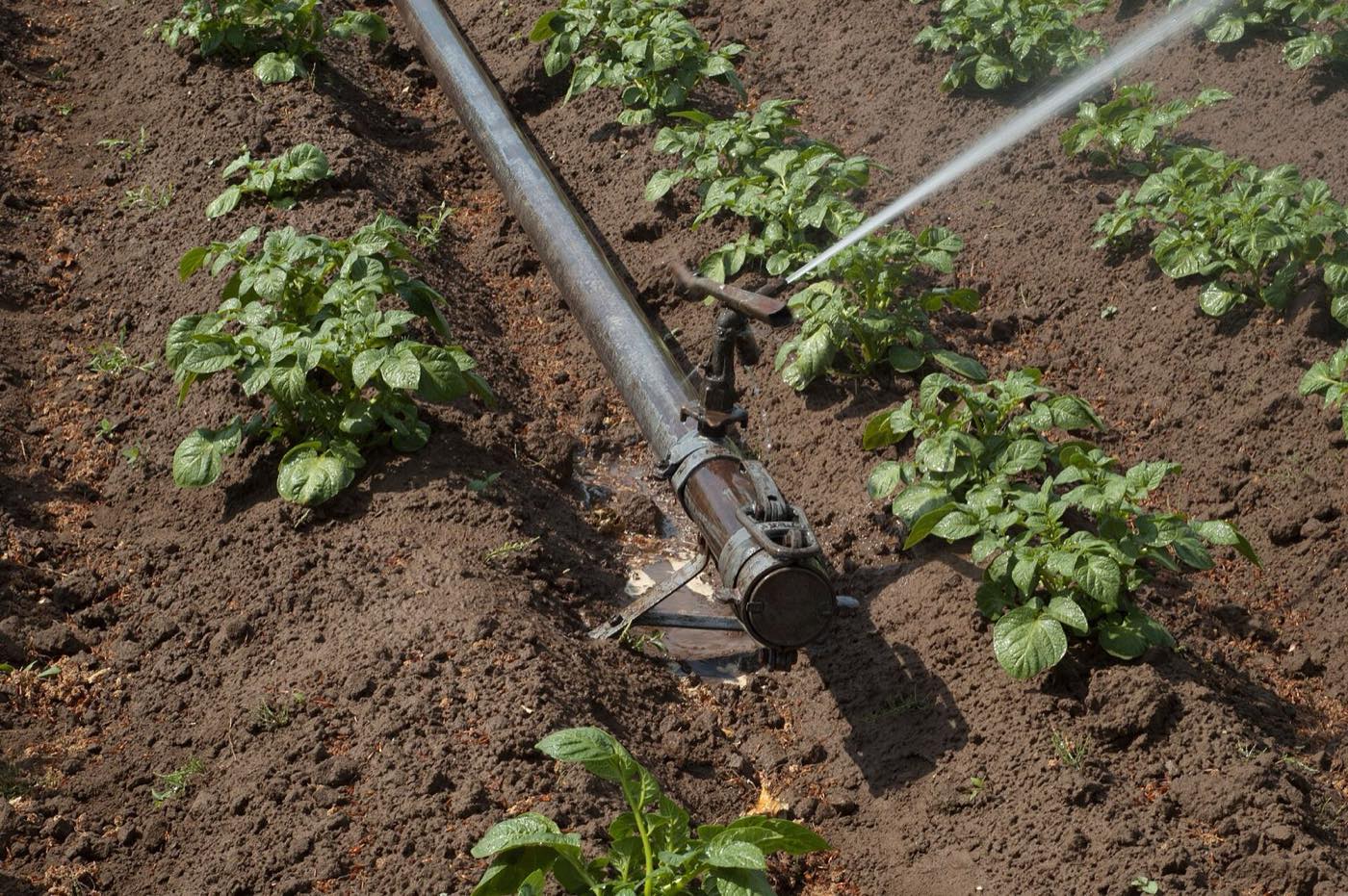
Image source: File:Irrigation system "Perrot"-sprinkler and end fitting.jpg · CC via Wikimedia Commons
Water when the grass asks
For cool-season grasses like Kentucky bluegrass, the first signs of drought are a bluish-green tint and footprints that stay visible after you walk across the lawn. Iowa State's turf guidance says to water at those first signs of stress rather than on a fixed schedule.
Warm-season grasses signal stress differently, so confirm the signs for your grass with your local extension office. The principle is the same everywhere: learn your lawn's baseline, then respond to it, a fixed every-other-day habit waters on the lawn's worst days and skips its best.
Deep and infrequent beats light and frequent
Most lawns in the upper Midwest need roughly 1 to 1.5 inches of water per week during the growing season, applied in one watering or split into two applications three or four days apart. The reason for the pattern matters: frequent, light sprinklings wet only the surface, promoting shallow roots and lush top growth that dies back fast in drought, while deep, less frequent watering pushes roots down.
Measure, do not guess. Iowa State recommends setting out several straight-sided cans in the sprinkler's pattern and timing how long it takes to collect an inch of water, that number becomes your personal watering clock for the season.
- Weekly total: about 1 to 1.5 inches, in one or two deep applications.
- Frequent light watering = shallow roots and weaker turf.
- Measure with straight-sided cans, not a wet-feeling guess.
Early morning is the best time
The ideal window is early morning, roughly 5 to 9 a.m., because water soaks in with little loss to evaporation and the grass blades dry quickly afterward. Midday watering is less efficient: evaporation is rapid and wind can carry water onto driveways and streets.
Evening or nighttime watering is the opposite mistake: it leaves turf wet through the night, and prolonged leaf wetness can increase disease problems. Morning watering satisfies both goals at once.
- Early morning: least evaporation, fastest-drying leaves.
- Midday: sun and wind waste much of the water.
- Evening or night: long leaf wetness raises disease risk.
Adjust for rain, soil, and region
Rain changes the math. If a storm delivers a real soaking, cancel the next scheduled watering and let the lawn use what fell; a rain gauge makes that call honest. In drier regions, extension scheduling methods, from can tests to irrigation schedules tuned to local evapotranspiration, keep lawns alive on less water.
Soil type matters too: sandy soil drains fast and may need lighter, more frequent watering, while clay holds moisture longer. Warm-season lawns in the South face hotter summers and different schedules, which is why Georgia's extension service coaches schedule-based lawn care tuned to local conditions. Wherever you live, your county extension office publishes watering guidance for your grass and soil.
- A real rain can cancel the next scheduled watering.
- Sandy soil drains fast; clay holds water longer, adjust accordingly.
- Local rules and local grass: check your state extension guide.
Sources
Sources used for this page
Keep planning
Related guides
Fall Lawn Care Calendar: A Month-by-Month Plan for Cool-Season Grass
A month-by-month fall lawn care calendar for cool-season grass: aeration, overseeding, fertilizer, and leaf cleanup in the order they matter most.
Lawn careHow to Aerate a Lawn: Timing, Methods, and What It Actually Fixes
What core aeration fixes, when to aerate cool-season grass, how core aeration differs from spike aeration, and when to skip it entirely.
Lawn careOverseeding Your Lawn: Fall vs. Spring and How to Do It Right
Why homeowners overseed a cool-season lawn, why fall beats spring in most regions, and the mow, loosen, seed, cover, and water method.