Lawn care
Spot-Treating Lawn Weeds: Tools, Timing, and Label Safety
By Lawn & Loam Editorial DeskPublished 2026-08-096 min read
Dandelions in the turf and clover creeping in from the edge are not emergencies, they are signals, and most can be handled one plant at a time. Spot treatment means treating individual weeds instead of broadcasting product over the whole lawn, and it works best when you know what you are treating, when, and under what rules. The page covers identification basics, tool and timing choices, and the EPA label rules that govern every herbicide decision. The examples stay at the active-ingredient and label level so you can verify the product sold in your area.
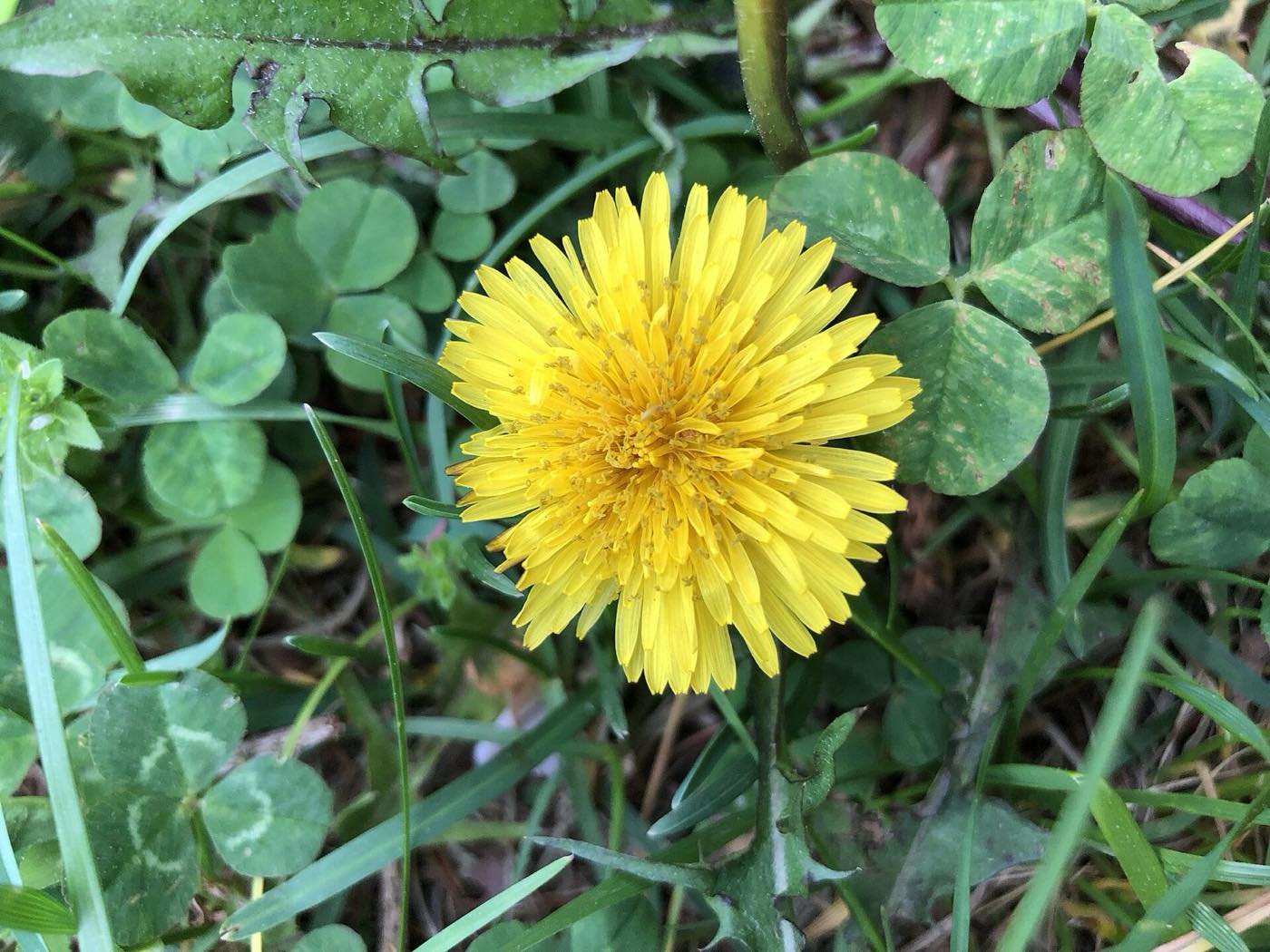
Image source: File:2019-04-30 18 04 39 Dandelion flower in a lawn along Tranquility Court in the Franklin Farm section of Oak Hill, Fairfax County, Virginia.jpg · CC via Wikimedia Commons
Identify the weed before you treat it
The first split is broadleaf versus grassy. Broadleaf weeds, dandelion, white clover, plantain, and many others, have wide, netted leaves and are the usual targets of spot treatments. Grassy weeds like crabgrass are a different problem with different products and timing, so do not treat everything with one bottle.
Within broadleaf weeds, species differ by age and season. Dandelions start as low rosettes and bolt to yellow flowers; clover spreads low with three leaflets; plantain hugs the ground with ribbed leaves. Identifying the plant tells you whether you are fighting an annual that returns from seed or a perennial that regrows from roots, which changes your timing.
- Dandelion: rosette leaves, yellow flowers, a deep taproot.
- White clover: three leaflets, low spread, white blooms.
- Plantain: flat, ribbed leaves with a tough root crown.
- Crabgrass and other grassy weeds are a separate problem with separate products.
Tools and timing for a clean spot application
For small numbers of weeds, physical removal beats spraying, a weeder gets taproots like dandelion out cleanly. When you do reach for a herbicide, use a hand-held sprayer set to a narrow stream so you cover the leaf, not the lawn around it, and spray on a calm day, away from flower beds and paving. Drift and runoff are how spot treatments stop being spot treatments.
Timing follows the weed and the grass. Perennial broadleaf weeds in cool-season lawns are often best controlled in early fall, when the plant is moving carbohydrates to its roots; exactly when and what to apply depends on the label and your region. Avoid treating heat- or drought-stressed turf, and follow label watering restrictions.
- Small patches: pull or dig first; chemicals are optional.
- Calm day, narrow stream, leaf-only coverage.
- Cool-season lawns: perennial weeds are often best treated in fall; check your region.
- Never treat drought-stressed or heat-stressed turf.
Read the label, it is the law
Every herbicide sold in the United States carries an EPA-approved label, and that label is a legal document: using a product in a way that contradicts it is a violation of federal law, whatever a bottle or a blog says. The EPA's own guidance is blunt, always read the pesticide label before use.
Penn State's label-reading guide lists what to look for: the active ingredient, the signal word that flags toxicity, the application rate, required protective equipment, the weeds listed as controlled, and any re-entry or watering restrictions. Store products in their original containers and follow local disposal rules.
- Check: active ingredient, signal word, rate, PPE, target weeds, restrictions.
- More is not better: exceeding the labeled rate is illegal and wasteful.
- Keep the original container, out of reach, and dispose per local rules.
The non-chemical first line
The cheapest weed control is a healthy lawn: turf mowed at the right height, watered deeply, and fed on a soil-test-based schedule crowds out weeds before they establish. Oregon State's homeowner guidance walks through prevention and lower-risk options alongside chemical choices, and recommends treating spot control as the tool for the leftovers, not the whole strategy.
If weeds keep returning to the same spots, that is a soil or turf problem, not a product problem. Look at drainage, compaction, shade, and mowing height before you spray more, treating the symptom twice a year is more expensive than fixing the cause once.
Sources
Sources used for this page
Keep planning
Related guides
Fall Lawn Care Calendar: A Month-by-Month Plan for Cool-Season Grass
A month-by-month fall lawn care calendar for cool-season grass: aeration, overseeding, fertilizer, and leaf cleanup in the order they matter most.
Lawn careHow to Aerate a Lawn: Timing, Methods, and What It Actually Fixes
What core aeration fixes, when to aerate cool-season grass, how core aeration differs from spike aeration, and when to skip it entirely.
Lawn careOverseeding Your Lawn: Fall vs. Spring and How to Do It Right
Why homeowners overseed a cool-season lawn, why fall beats spring in most regions, and the mow, loosen, seed, cover, and water method.