Equipment
Leaf Blowers: Handheld or Backpack, Cordless or Gas
By Lawn & Loam Editorial DeskPublished 2026-07-286 min read
Leaf blowers are sold on two numbers that most buyers read backward, and on a body-style choice that depends on how long you actually blow. This guide decodes CFM and MPH, compares handheld and backpack designs, weighs cordless against gas, and matches the tool to your leaf load. Use the measurements here to set a buying threshold for your property; current models change, but the workload does not. Before shopping, measure the longest path you clear, note whether leaves are usually dry or wet, and decide where a second battery or fuel can will be stored safely.
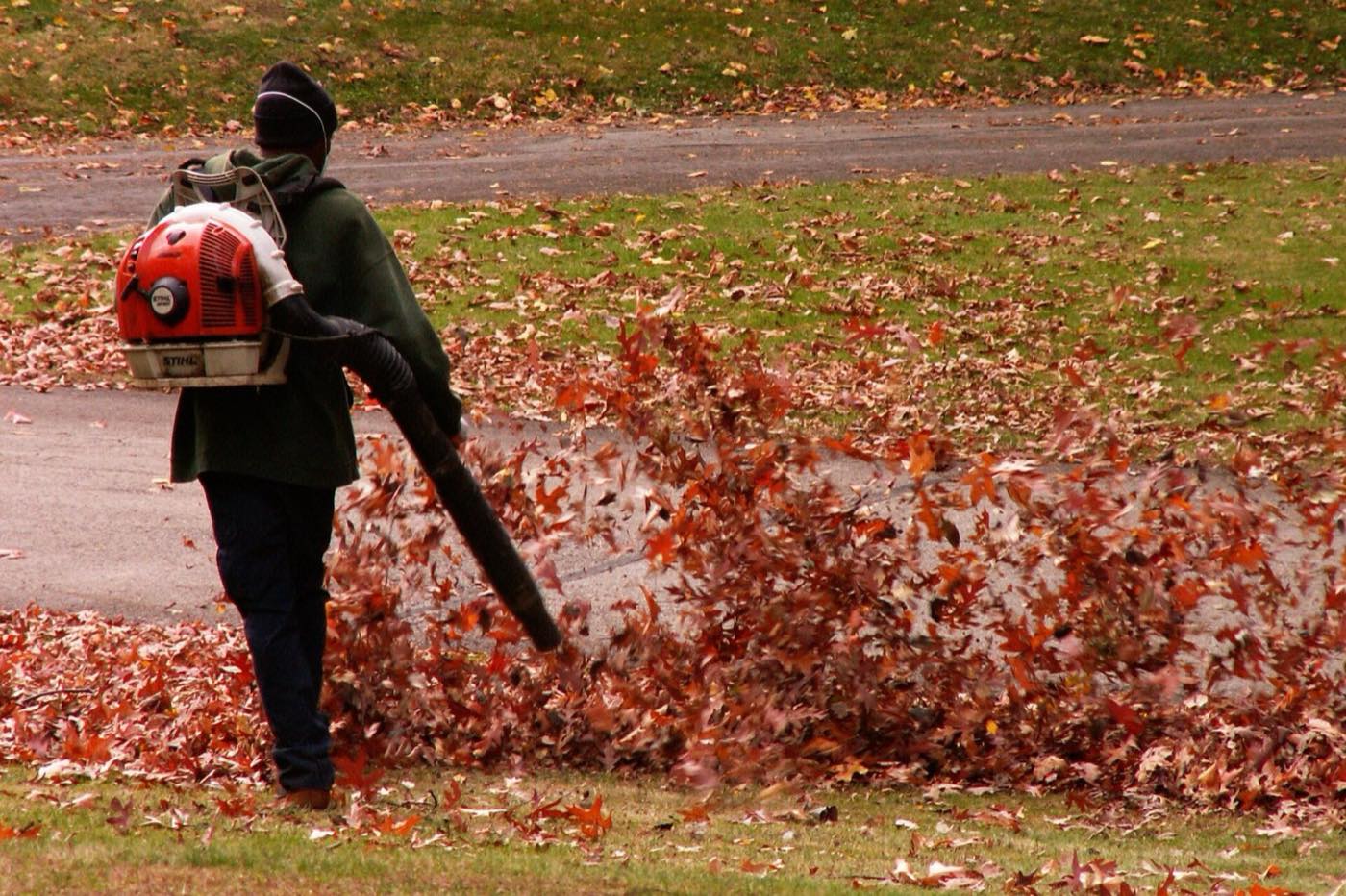
Image source: File:Leaf blower, Homewood Cemetery.jpg · CC0 via Wikimedia Commons
Read CFM and MPH together
CFM, cubic feet per minute, is air volume: the number that shoves loose leaves across open ground. MPH is airspeed at the nozzle: what dislodges leaves packed into beds, caught along fence lines, or matted and wet. Manufacturer spec pages publish both because neither alone describes a cleanup. As a practical screening range, many handheld tools sit around 350–500 CFM and 100–180 MPH, while backpack units commonly move roughly 450–750 CFM; treat those as comparison bands, then verify the exact certified specification for the model you can buy. As a planning band, handheld blowers often sit around $100–$250 and backpack units around $250–$600; local sales and battery bundles change the final price. Consumer Reports' buying guide explains why airflow and noise should be compared together. Before comparing machines, walk the route once and note the tightest edge, the dampest leaf pile, and whether you will clear beds without throwing mulch.
Set the priority by your property. For a small lot with mostly dry leaves, a 350–450 CFM handheld is often enough; dense wet piles or long driveway runs justify looking toward the upper end of the range or a backpack unit. Wide-open lawn and driveway work rewards CFM; beds, fence lines, and wet autumn leaves reward MPH. A blower strong in only one number will frustrate you exactly where it is weakest.
Handheld or backpack: where the weight goes
Handheld blowers are light, compact, and right for patios, walks, and small lots where the whole job lasts minutes. Backpack models put the engine or battery on your back, trading a little setup fuss for far less arm fatigue on long cleanups.
Manufacturer ergonomics guidance is blunt about the reason: padded harnesses and vibration control exist because sustained blowing wears on hands, arms, and shoulders. The tool should carry that strain, not you.
- Short, frequent jobs favor a handheld unit you can grab in seconds.
- Big fall cleanups and long runs favor a backpack with a real harness.
- Test the weight distribution, not just the trigger feel.
Cordless, corded, or gas
Battery blowers start instantly, run quietly, and produce no fumes, friendly to neighbors and to communities restricting gas equipment. Their runtime shrinks as the job grows and the leaves turn wet, so size the battery to your cleanup, not to a dry test run.
Gas blowers stay strong for hours and chew through wet leaf packs, but they are loud and increasingly regulated: small off-road engines like blowers are certified under California's Small Off-Road Engine program, and local restrictions on gas blowers have been spreading.
Corded electric blowers offer unlimited runtime near an outlet with minimal upkeep, at the price of the cord's reach.
- Light trees and a small yard: a handheld battery blower covers it.
- Mature trees and real fall volume: backpack style, gas or high-capacity battery.
- Long open stretches favor CFM; edges and beds favor MPH.
- Blowers are loud, wear hearing protection.
Sources
Sources used for this page
Keep planning
Related guides
How to Choose a Lawn Mower: Match the Type to Your Yard
Push, self-propelled, or riding: match your mower type to yard size, slope, and the mowing time you can actually give it.
EquipmentCordless vs Gas Mowers: A Range, Power, and Cost Comparison
A comparison of cordless and gas mowers: runtime, power in tough grass, noise, maintenance, and total cost over several seasons.
EquipmentRiding Mower vs Zero-Turn: Yard Shape, Terrain, and Skill
Riding mowers versus zero-turns: how yard shape, terrain, budget, and the steering learning curve should decide which you buy.