Equipment
Mower Blades: Types, Sharpening, and Mulching vs Bagging
By Lawn & Loam Editorial DeskPublished 2026-07-266 min read
The blade under your mower decides whether clippings disappear into the turf, fill a bag, or blow across the driveway, and a dull one damages the lawn on every pass. The page sorts the common blade types, walks through the mulching-versus-bagging decision, and tells you when to sharpen and when to replace. Before ordering, check the mower manual for blade length, center-hole shape, and whether the deck accepts a mulching plug or bagger. Those three checks prevent the most common wrong-blade purchase.
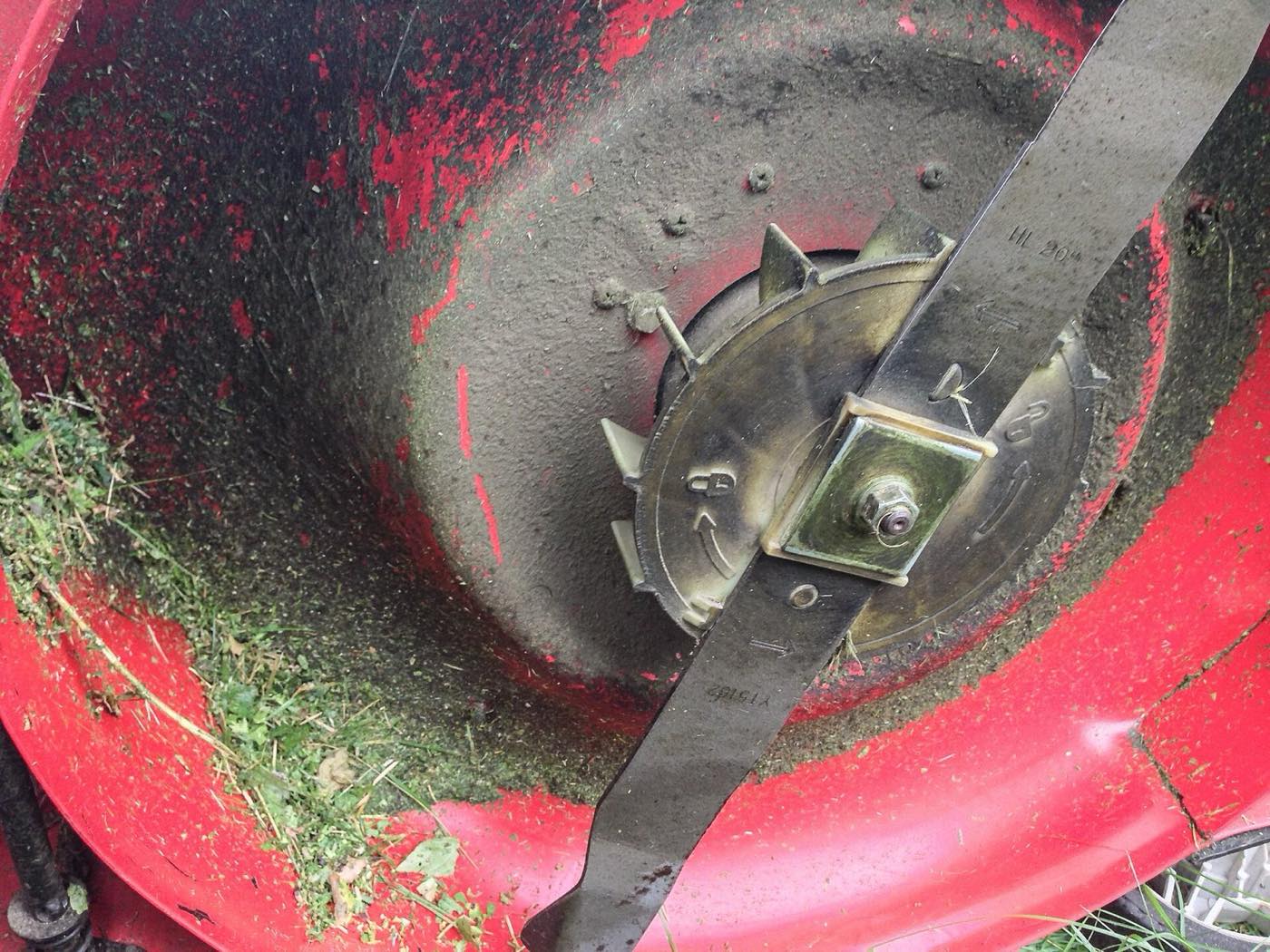
Image source: File:Lawn Mower Blade - Grass Clippings (17218096280).jpg · CC via Wikimedia Commons
Standard, mulching, and high-lift blades
Rotary mowers accept blades built for three jobs. Standard blades push clippings toward the discharge chute. Mulching blades use extra cutting edges and a curved profile to recut clippings inside a compatible deck; confirm the deck manual before fitting them.
High-lift blades scoop air and clippings upward, which improves bagger fill and discharge reach, helpful in fall, though rougher on the turf when clippings are left in place.
- Mulching often needs a kit or a plug, not just a different blade. Check the owner's manual for blade length, center-hole pattern, and deck hardware before ordering; a blade that fits the spindle can still be wrong for the mower's discharge setup.
- Changing discharge style means swapping deck hardware, not just the blade.
- Match the blade to how your deck is set up to handle clippings.
Mulch, bag, or side-discharge: pick by season and condition
Leaving clippings returns nitrogen and other nutrients to the turf. Oregon State research found that mulching mowers can substantially cut fertilizer needs, and clippings do not cause thatch, a myth extension offices keep correcting.
Bag when the grass has grown too tall, when it is wet and clumping, or when you want a clean pickup in fall. Side-discharge is the fast, simple option on open turf, though it scatters clippings onto walks and beds.
- Mulch by default during the growing season.
- Bag after missed mowings and during wet spells.
- Wet or overlong grass is the classic reason to switch from mulch to bag.
Sharpen on a schedule, replace on sight
A dull blade tears grass instead of cutting it, leaving ragged, browning tips, and extension services list sharp blades among the most important mowing practices. Oregon State cites typical manufacturer advice to sharpen every 20 to 25 hours of use, which lands most homeowners at a few sharpenings per season.
Replace a blade that is bent, cracked, or worn thin; sharpening cannot fix structural damage. After grinding or replacing, balance the blade so the mower runs smooth, and never reach under a deck without pulling the spark plug or removing the battery.
- Check the cutting edge for nicks and rolled edges before each season.
- Sand and gritty soil dull blades faster; sharpen more often on those lawns.
- Disconnect power before any blade work, no exceptions.
Sources
Sources used for this page
Keep planning
Related guides
How to Choose a Lawn Mower: Match the Type to Your Yard
Push, self-propelled, or riding: match your mower type to yard size, slope, and the mowing time you can actually give it.
EquipmentCordless vs Gas Mowers: A Range, Power, and Cost Comparison
A comparison of cordless and gas mowers: runtime, power in tough grass, noise, maintenance, and total cost over several seasons.
EquipmentRiding Mower vs Zero-Turn: Yard Shape, Terrain, and Skill
Riding mowers versus zero-turns: how yard shape, terrain, budget, and the steering learning curve should decide which you buy.