Equipment
Pole Saws vs Pole Pruners: Reaching High Branches Without a Ladder
By Lawn & Loam Editorial DeskPublished 2026-08-056 min read
A branch scrapes the roof, another hangs over the walk, and the ladder in the garage suddenly looks like the plan. Pole saws and pole pruners exist so you can cut overhead growth with both feet on the ground, but the two tools are not interchangeable, and some jobs still belong to a professional. The page covers the difference between them, the safety rules for working overhead, and the honest line between DIY and a phone call.
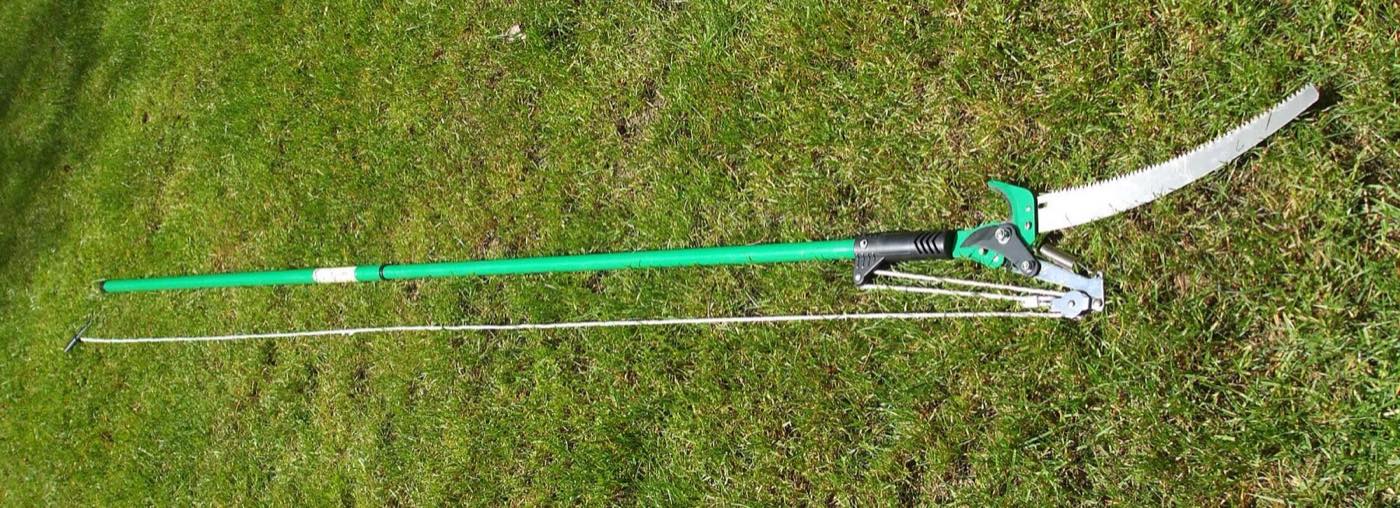
Image source: File:TeleskopBaumsäge.jpg · CC via Wikimedia Commons
Pole saw vs pole pruner: pick by branch size
A pole saw carries a saw blade, manual or powered, at the end of an extending pole, for branches too thick for a cutting head. A pole pruner puts a bypass cutting head on the same kind of pole, often with a small saw included, for lighter branches you can snip cleanly. For routine touch-ups the pruner is faster and more precise; when a branch is too thick to clip, reach for the saw.
Power changes the trade-off: a battery pole saw cuts faster but adds weight and a moving chain overhead, while manual saws are quiet, light, and slower. Match the tool to how much you prune.
- Small, live branches about wrist-thick or less: pole pruner or manual saw.
- Thicker or dead wood, or frequent pruning: a powered pole saw.
- The longest reaches strain both the pole and your arms.
The ladder is the riskiest part of the job
Falls from portable ladders are a leading cause of serious injury, and pruning pushes people into the habits that cause them: a ladder on soft or sloped ground, overreaching to the side, or climbing with a saw in hand. Ohio State's extension safety training for landscape crews flags these same hazards, including the rule against working above the point of support.
A pole tool's whole point is that you stay grounded. If a branch still forces you onto a ladder or into a tree, the job is probably too big for homeowner equipment. Before any overhead work, scan for power lines: OSHA's ladder safety guidance puts overhead electrical lines at the top of the checklist.
- Never set a ladder on uneven, soft, or wet ground.
- Look for overhead power lines before handling any metal or powered pole tool.
- No overreaching: move the ladder or get a longer tool rather than lean.
Safety basics for cutting overhead
Clear the drop zone before the first cut, branches and cut pieces fall where you did not expect them. Wear eye protection, gloves, and long sleeves, keep people and pets well back, and inspect the tool: a dull manual blade or a worn chain is more dangerous than a sharp one, and powered tools should be checked per their manuals.
On heavier branches, use the three-cut method that extension pruning guides describe: an undercut, a top cut that removes the weight, and a final cut at the collar, so the branch does not rip bark down the trunk as it falls. Treat dead, hanging, or cracked wood as suspect, it is heavy, brittle, and unpredictable.
When to call a professional
Some situations no homeowner tool fixes. Call a licensed arborist or tree service when branches touch or threaten power lines, and contact the utility first, when a branch is larger than your tool's capacity, and whenever you would need to climb the tree or stand on a roof to reach it.
Cracks, decay, leaning, or dead wood high in the canopy are also professional territory, proper cuts matter for long-term tree health, and a bad cut on a big limb is a wound the tree lives with for years.
- Branches near or touching utility lines: utility first, then a pro.
- Big, heavy, or dead hanging branches beyond pole-tool range.
- Anything requiring a ladder, a climb, or work over structures.
- Trees with cracks, decay, or lean: have them assessed before pruning.
Sources
Sources used for this page
Keep planning
Related guides
How to Choose a Lawn Mower: Match the Type to Your Yard
Push, self-propelled, or riding: match your mower type to yard size, slope, and the mowing time you can actually give it.
EquipmentCordless vs Gas Mowers: A Range, Power, and Cost Comparison
A comparison of cordless and gas mowers: runtime, power in tough grass, noise, maintenance, and total cost over several seasons.
EquipmentRiding Mower vs Zero-Turn: Yard Shape, Terrain, and Skill
Riding mowers versus zero-turns: how yard shape, terrain, budget, and the steering learning curve should decide which you buy.