Equipment
Robot Lawn Mowers: How They Work and Who They Really Suit
By Lawn & Loam Editorial DeskPublished 2026-07-247 min read
A robot mower trades your Saturday mowing session for a machine that trims a little every day, but it is not a lawn-care replacement, and it suits some yards far better than others. The page explains how robot mowers navigate, who they genuinely fit, what setup and upkeep look like, and where their limits sit. Compare the boundary method, slope rating, coverage limit, theft controls, and local service before shortlisting a machine.
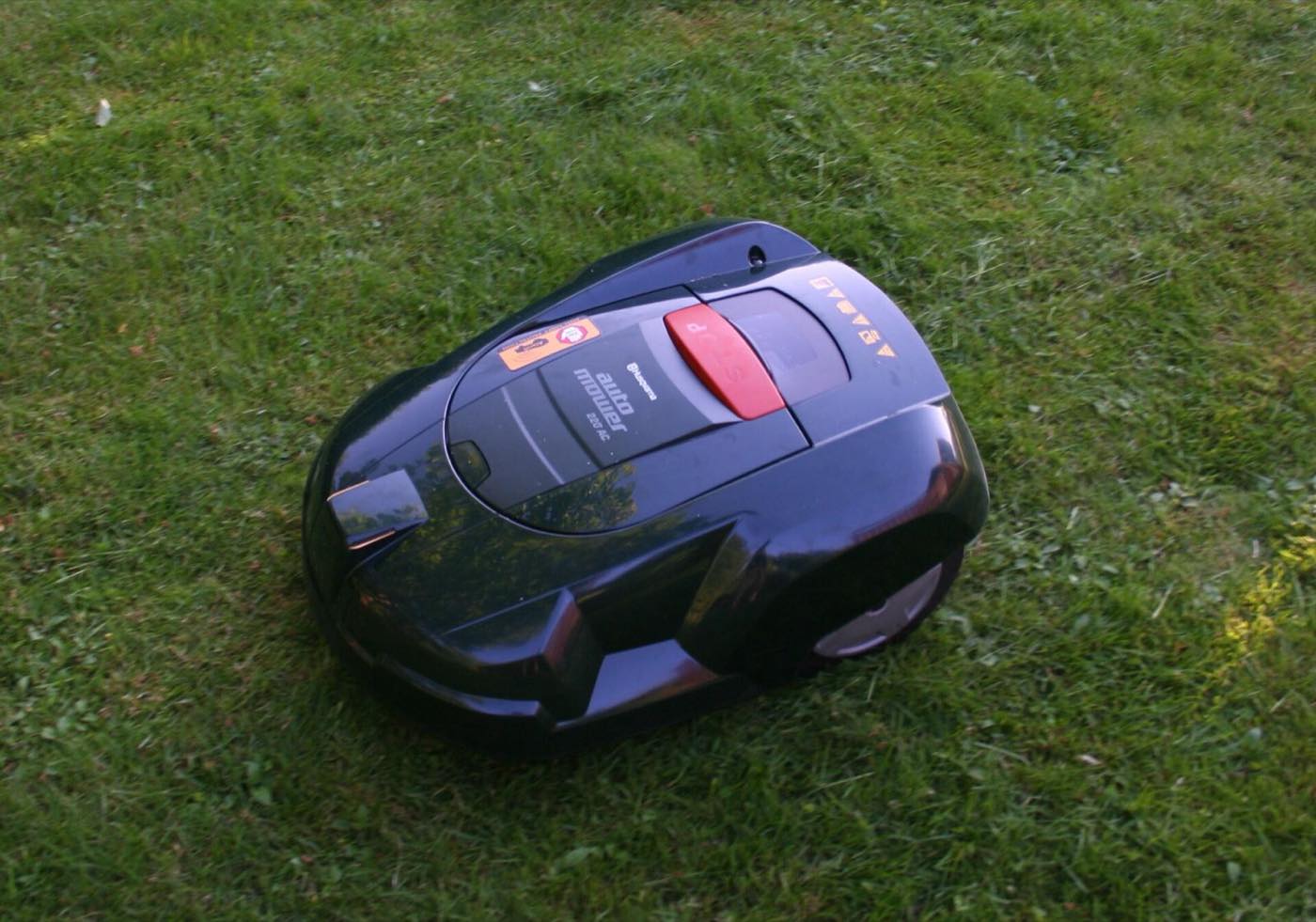
Image source: File:Automower.jpg · Public domain via Wikimedia Commons
How a robot mower actually cuts grass
Robot mowers run often, daily or every few days in season, removing a little grass with each pass. The clippings are so fine that they fall into the turf and break down as a natural fertilizer, which is why manufacturers describe steady robotic mowing as feeding the lawn while cutting it.
The machine handles the logistics itself: sensors stop it and reverse it around obstacles, the blades cut off the instant it is lifted, and when the battery runs low it navigates back to its charging station on its own.
Boundary wire or satellites: how it knows the lawn
Many robot mowers learn their limits from a boundary wire staked or buried around the lawn's edge and around beds and other no-go areas; installation depth and layout follow the model manual. A guide wire laid from the charging station helps the mower find its way home from distant corners.
Newer models can skip the wire entirely, using high-precision satellite positioning to follow virtual boundaries drawn in an app. That flexibility suits complex or changing layouts, but it needs a clear view of the sky, and some hybrid designs fall back on a wire where coverage is poor.
- Boundary wire systems are proven and predictable; satellite systems are easier to relocate.
- Sketch the mowing zones and obstacles before you buy.
- Installation is DIY-able or a paid service, depending on the model and your time.
Yards robot mowers genuinely suit
Robot mowers like flat-to-gentle, fairly simple lawns. They handle narrow passages and moderate slopes, can mow several connected sections through the wire layout, and typical sizing covers up to roughly an acre and a quarter per unit, with larger properties split across multiple machines.
They also reward consistency: scheduling that adjusts to grass growth and tolerates rain keeps the turf in its sweet spot. Even then, keep a string trimmer handy, robots leave the edges and the bases of obstacles untouched.
- Simple layout, no steep drops, steady growth: a strong candidate.
- Beds, trees, and mid-lawn slopes: check each model's grade limits.
- Edge work and fall cleanups still require you, or another tool.
Setup, upkeep, and honest limits
Setup means placing the charging station, running the boundary wire, staked or buried, and programming schedules from an app. Upkeep is modest but real: keep the sensors and underside clean, rotate or replace the blades on schedule, and store the unit indoors over winter.
Know the limits before you romanticize the idea. Steep banks, very rough ground, and complex, heavily planted yards challenge most units. Robots do not edge, bag, or dethatch, and theft protection, while common, is a feature to research rather than assume.
- Heavy leaf season and thatch still call for conventional tools.
- Research theft deterrents and app features on the models you consider.
- A robot reduces mowing time; it rarely removes it.
Sources
Sources used for this page
Keep planning
Related guides
How to Choose a Lawn Mower: Match the Type to Your Yard
Push, self-propelled, or riding: match your mower type to yard size, slope, and the mowing time you can actually give it.
EquipmentCordless vs Gas Mowers: A Range, Power, and Cost Comparison
A comparison of cordless and gas mowers: runtime, power in tough grass, noise, maintenance, and total cost over several seasons.
EquipmentRiding Mower vs Zero-Turn: Yard Shape, Terrain, and Skill
Riding mowers versus zero-turns: how yard shape, terrain, budget, and the steering learning curve should decide which you buy.