Basics
Starter Yard Tools: The Essential First-Year Homeowner Kit
By Lawn & Loam Editorial DeskPublished 2026-08-036 min read
You just closed on a house and the yard came with it: no mower in the garage, no rake, and a first growing season that will not wait. This guide ranks the starter tools a new homeowner actually needs, and the order to buy them, so you can spend once instead of guessing three times. It covers tool types and how they fit a typical home lawn, not specific brands or models.
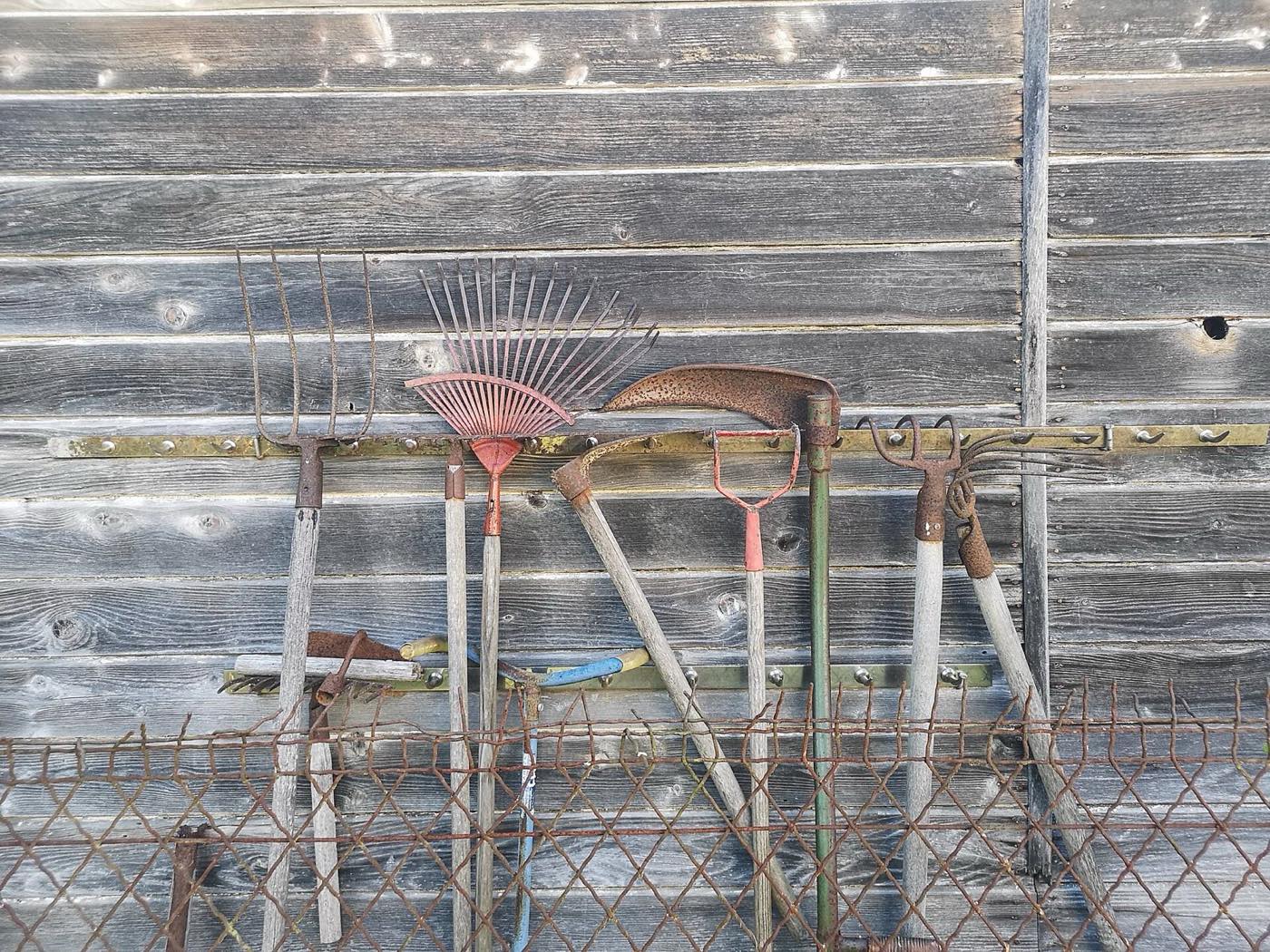
Image source: File:Garden tools rack (ii).jpg · CC via Wikimedia Commons
Start with the mower
The mower is the one tool nearly every lawn demands, so make it your first purchase and research it the most. Match the type to the yard: a small, flat lot can be served by a manual reel or battery push mower, a larger yard or slope is easier with a self-propelled model, and a riding mower pays off only when the open lawn is genuinely large. Fences, beds, and trees add trim work, so weigh shape as much as acreage.
Whatever you pick, two habits decide more than the machine does. For a first mower, deck condition matters less than the habit behind it: keep the blade sharp and shorten an overgrown lawn in stages so a single pass does not strip away roughly a third or more of the leaf blade.
- Push mower (manual or battery): simplest and cheapest; right for small, flat yards.
- Self-propelled: takes over the pushing on slopes and larger lots.
- Riding mower: consider only for open lawns big enough to justify storage and upkeep.
- Mulching vs bagging: match the deck to how you want clippings handled.
Next: trimming the edges
No mower reaches a fence line, a tree trunk, or the strip beside the driveway. A string trimmer handles those edges in battery or gas versions, and most homeowners buy one before the first full season ends. Keep a spare spool of line and eye protection with it.
An edger is a separate, smaller need: it cuts a clean line between turf and pavement or beds. Skip it at first if your edges are simple. If you are also buying a leaf blower or hedge trimmer, consider whether they should share one battery platform, a cordless platform is a bigger decision than any single tool on it.
Hand tools that earn their keep
Before adding more power equipment, fill out the hand-tool basics: bypass pruners for small branches and shrubs, a flat spade for planting and bed edges, and two rakes, a leaf rake for fall cleanup and a stiff bow rake for leveling soil and clearing debris. Add sturdy gloves and you can handle most weekend jobs.
Quality matters most in the tools you use every week: a cheap shovel makes every job harder, and the small extra for a decent one is felt in your hands by the third bed. Buy the tool for the job you actually do, and you will not be replacing it next spring.
- Bypass pruners, small-diameter branches and light shrub work.
- Flat spade or shovel, planting, transplanting, and bed edges.
- Leaf rake plus a bow rake, two different jobs, two tools.
- Gloves and eye protection, the cheapest insurance on the list.
Buy in layers, rent the rest
Resist the urge to buy everything in year one. Tools you will use a handful of times, a leaf blower on a lightly treed lot, a dethatcher, a core aerator, are better rented or handled by a local service until you know your yard's rhythms.
Read the manual that ships with every powered tool before first use. Most owner failures are maintenance failures: dull blades, stale gas, and a forgotten air filter. Get the care routine right and a modest starter set lasts a decade.
- Year-one core: mower, string trimmer, rakes, pruners, shovel.
- Year-two adds: edger, leaf blower, and upgrades you actually missed.
- Rent or hire: aerators, dethatchers, and anything used twice a year.
Sources
Sources used for this page
Keep planning
Related guides
Your first year in a new yard: a homeowner's maintenance primer
Prioritize lawn mowing, watering young trees, drainage checks, and equipment care through your first year as a new homeowner.
BasicsLawn Care by Month: A Year-Round Maintenance Map
A 12-month lawn care map for cool-season grass: the main task for each month, plus how to adjust for zone, weather, and grass type.
Edible gardenRaised garden beds: sizing, materials, and where to put them
How to choose raised garden bed size, depth, materials, and location, plus how raised beds compare with growing crops in the ground.