Equipment
String Trimmer vs Edger: Do You Really Need Both?
By Lawn & Loam Editorial DeskPublished 2026-07-306 min read
String trimmers and edgers look like cousins and do opposite jobs: one cuts grass the mower cannot reach, the other cuts a clean vertical line where lawn meets pavement. The page explains the difference, helps you decide whether you need one or both, and covers line size, power, and the safety habits that matter with spinning line and blades.
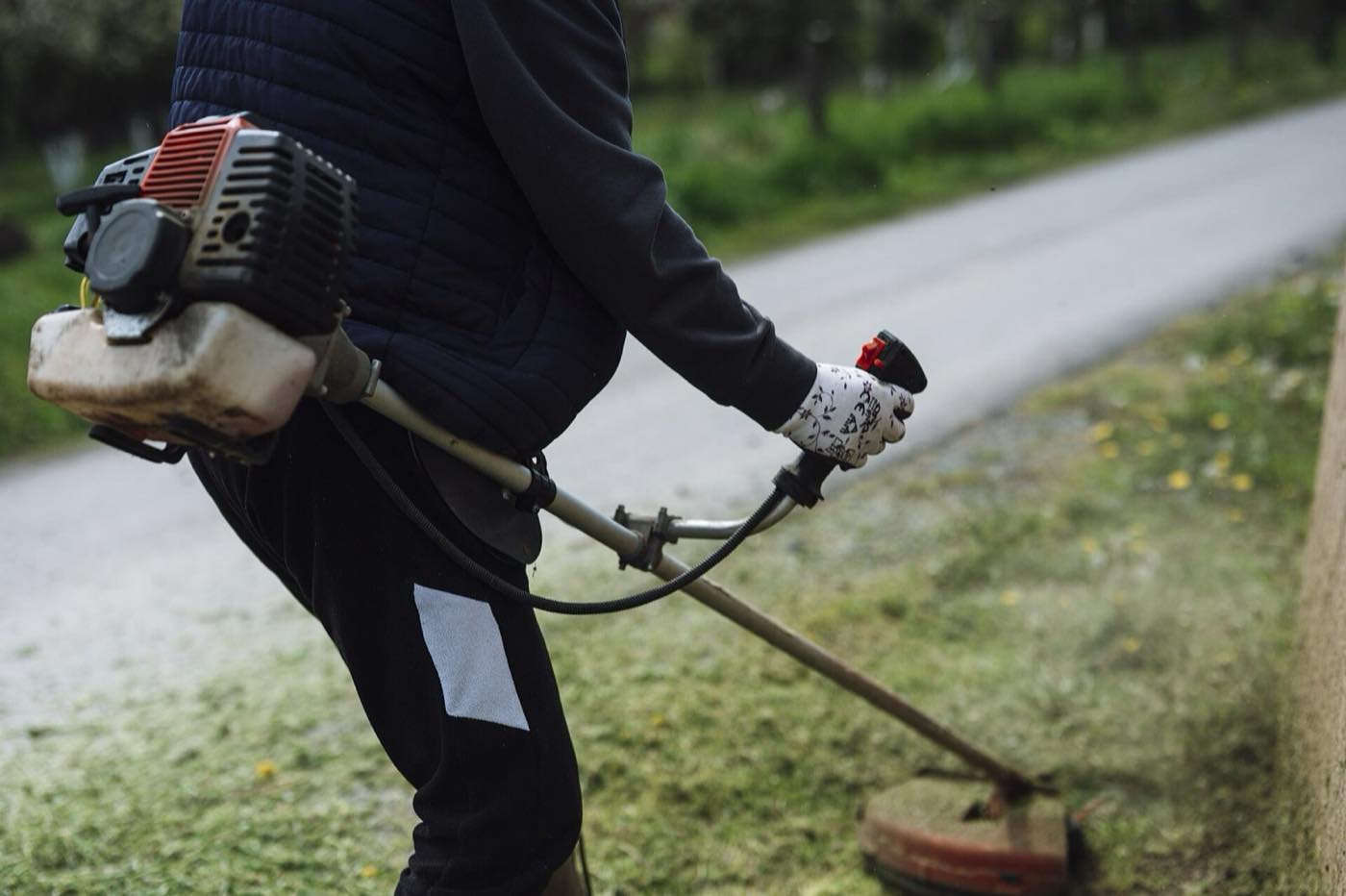
Image source: File:Person uses a gas-powered trimmer to cut grass near a path in a green area.jpg · CC via Wikimedia Commons
Two different kinds of clean
A string trimmer spins a short length of nylon line at high speed to reach what a mower cannot, along fences and walls, around posts and planters, under decks. An edger uses a small rotating blade to cut a narrow, vertical trench along hard edges, separating the lawn from a sidewalk or driveway.
That difference shows up in the finished edge. Trimmer work is rounded and forgiving; only an edger produces the deep, squared-off line between lawn and concrete.
Do you need both?
If your property has hard edges, walks, driveways, curbs that grass keeps creeping over, an edger is what keeps them sharp, and it covers long runs faster than any trimmer technique. If your grass mostly meets fences, beds, and trunks instead, a trimmer already handles the bulk of the finish work.
Many homeowners start with a trimmer and add an edger only when the border starts looking untidy. If you prefer one power head, multi-tool systems let you swap trimmer and edger attachments on the same shaft.
- Concrete and asphalt borders that grass crosses: buy the edger.
- Fences, beds, trees, and general cleanup: the trimmer covers it.
- One power head with both attachments is a middle path worth considering.
Line size and power, in plain terms
Trimmer line diameter is the spec that matters most. Thin line handles routine grass cleanly, while brushy growth calls for heavier line, but only up to what the trimmer head is rated to carry. Straight-shaft trimmers reach farther under decks and suit taller operators; curved shafts are lighter and nimble for detailed work.
Edgers split into wheeled units that chew through long, overgrown edges quickly and stick-style heads for season-long maintenance cuts. Whatever the power source, match the machine to how much thick growth you actually clear.
Safety with spinning line and blade
Both tools throw debris at high speed. Wear eye protection and long pants, clear stones and wire before you start, keep children and pets well back, and treat the spinning head as a hazard even at idle: let it stop before you reach in, and never run a trimmer straight over hard objects that can become projectiles. The same struck-by and noise hazards are a leading concern in professional landscaping, where OSHA's safety guidance for the industry repeats these basics every season.
Before edging, watch for buried sprinkler heads and landscape wiring along the same lines you are about to cut.
- Glasses, not sunglasses: flying debris is the main threat.
- Stop the head before adjusting line or clearing tangles.
- Keep hands and feet clear of the spinning head at all times.
Sources
Sources used for this page
Keep planning
Related guides
How to Choose a Lawn Mower: Match the Type to Your Yard
Push, self-propelled, or riding: match your mower type to yard size, slope, and the mowing time you can actually give it.
EquipmentCordless vs Gas Mowers: A Range, Power, and Cost Comparison
A comparison of cordless and gas mowers: runtime, power in tough grass, noise, maintenance, and total cost over several seasons.
EquipmentRiding Mower vs Zero-Turn: Yard Shape, Terrain, and Skill
Riding mowers versus zero-turns: how yard shape, terrain, budget, and the steering learning curve should decide which you buy.